Blog

  • The Truth Can Suck. But it’s the Secret to Changing Your Life

    The Truth Can Suck. But it’s the Secret to Changing Your Life

    By Mandie

    Personal growth is not a walk in the park. If anyone tells you otherwise, they’re lying.  

    Do you really want to change your life? Then you’ve got to get real, you’ve got to get honest, and you’ve got to be willing to stick it out when things get ugly. There will be times you’ll want to quit. But if you keep going, it’s more than worth it. Because if you change yourself, you change your life

    This summer my husband and I and a couple friends were at a Lindsey Sterling concert (she’s an amazingly talented/creative violinist and dancer). In between songs she gave an inspiring speech about her personal growth and overcoming depression. 

    She said she used to be depressed, and someone told her once that she was choosing to be. She felt upset about it, understandably, but she said she realized that this person was right. She began working on herself and faced some tough truths. She said it took a lot of work, but eventually she succeeded at turning her mindset and her life around. 

    “The truth will set you free, but first it will piss you off.”

    – Joe Klass, Twelve Steps to Happiness 

    My husband and I have talked a lot about the concept of looking in the mirror and taking responsibility for our happiness, and he helped me through some mentally shitty places. When I heard Lindsey speak I wanted to write about it. 

    What I’ve learned is that…  

    1. In order to change any mental or behavioral habits, you have to first look in the mirror and be honest with yourself.

    I had to ask myself questions like, am I doing things that are sabotaging my growth or success? Am I doing or not doing things that are holding me back? Am I making excuses for my behavior or attitude? Am I blaming other people for it? What thoughts am I thinking that are making me feel this way? 

    I’m not necessarily talking about people who are clinically depressed or suicidal. I’m not saying, hey, you can just change your mindset if you try. Some people have more things working against them. Like a chemical imbalance or a gut flora problem affecting their brain for example, or some other cause, which can make changing their mood or perspective way harder. 

    But we can all still take responsibility for seeking out answers and taking steps toward making changes. 

    2. Justifications and excuses get us nowhere. 

    We humans are great at bullshitting ourselves. We make up all kinds of justifications for why we’re doing what we’re doing so we can still feel good about ourselves. But if we want change, we must take responsibility for our behavior and attitude. 

    3. We must try not to get down on ourselves when we see things we don’t like.

    It can be extremely hard to face up to our faults, and equally hard not to let self-awareness crush our self-esteem. I had to be reminded many times that the purpose of looking in the mirror is to grow, not beat myself up over what I don’t like.  

    4. It’s easy when it’s easy.

    All of your worst traits will be most prone to showing up when we’re hurt, scared, angry, upset in some way, or not feeling good. 

    To paraphrase my husband: 

    It’s easy to be the best version of you when things are going great. The challenge lies in being true to who you want to be when things are tough.  

    5. We need to be patient with ourselves.

    It can feel like change takes forever. But looking back, it seems like the struggle and growth I went through happened so fast. I wasted so much time being upset about where I was at – that I wasn’t living at some ridiculously high standard I set for myself. Try to remember to be patient with yourself!  

    Sometimes it will also feel like you’re going backwards in your growth, but in the big picture you’re not. Remember the ups and downs are part of your journey, and a setback doesn’t mean you’re going backward overall

    Summary 

    If you want to change patterns that are holding you back, the truth will be the key to your transformation and success – and it will also piss you off. You must be willing to look in the mirror and admit the tough truths about yourself, stop making excuses and take responsibility for your happiness, try not to get down on yourself, be aware that your worst side shows up when you’re not feeling up to par, and be patient about change.

    If you enjoyed this article and want to hear when I publish new content, join my mailing list below!


  • How to Stop Limiting Your Potential: 3 Eye-Opening Insights That Can Change Your Life

    How to Stop Limiting Your Potential: 3 Eye-Opening Insights That Can Change Your Life

    By Mandie

    Have you ever seen one of those videos on social media showing how you’ve been using certain products, or eating certain foods, wrong your whole life? And you say to yourself, “Wow! I never thought of doing it that way!” That’s a little like how I felt when my personal growth mentor (and future husband) gave me some insights on the life challenges I was struggling to resolve when we were first dating.

    These insights turned my whole world upside down! I couldn’t unlearn what I had learned, so I had to change my old ways of functioning if I wanted to move forward. It was hard, but it was worth it.

    Here are the 3 life changing insights I learned that can change your life:

    1. If what you think, what you do, and what you say don’t line up, it can hurt your self-esteem and your credibility.

    I said and did things that represented the person I wanted to be on the outside, while I hid the things I wasn’t proud of and lied just to keep on people’s good sides. My mentor figured this dishonest behavior probably was connected to the low self-esteem I struggled with (which affected everything in my life), and he was right!

    Besides hurting how I felt about myself, he pointed out, I could lose my friends’ or family’s trust the second anyone found out I wasn’t being genuine. He said if you want people to be able to count on you, you need to actually be the person you present yourself to be.

    I practiced paying attention and catching myself every time I was being dishonest. It can take a lot of work, but if you get your values/beliefs, words, and actions in alignment, the person people see is the person that you are. Some will like it and others will hate it, but those who stick with you are the ones who appreciate, respect, and admire you for who you are not for the image of yourself you present.

    You will feel better about who you are, your relationships will benefit because people will trust you, and your word will actually mean something.

    “Hiding how you really feel and trying to make everyone else happy doesn’t make you nice, it just makes you a liar.” 

    Jenny O’Connell

    2. What you believe about yourself dictates what you choose to say; but what you choose to say also dictates what you believe about yourself.

    Another way I was unknowingly limiting myself was through my language. It seems like common sense that what you say aloud reflects what you believe, but what surprised me was that you can also reprogram your beliefs with what you chose to say.  

    Say “I need this” enough times when the truth is you want it, and you will begin to believe that you need it. Limiting words are things like can’talwaysnever, and need. Non-limiting words/phrases are things like seems likefeels like, and right now.

    For example, the statement “I can’t handle my life – it’s too hectic” makes you feel hopeless and disempowered, versus “I’m struggling to handle my life right now,” which reminds you that what you’re going through is temporary, and there’s hope for change in the future. The truth isn’t that you “can’t do it,” the truth is that you’re having a hard time “right now.

    Whether you use limiting words/phrases about your abilities aloud or to yourself, you’re teaching your mind what to believe. Instead of using limiting words and phrases that aren’t true, try switching to more accurate and encouraging ones. Such as seems likefeels like, or right now.

    3. You don’t need to control how you feel – you need to control how you act.

    Trying to control your emotions is like trying to control waves in the ocean, you just can’t do it. And to make things worse, the harder you try the more frustrated you get – adding to your emotional overload. It wastes a ton of energy and gets you nowhere.

    Instead, try to let your feelings be; realize that they will pass and focus on what you can control – what you say and how you act. You can feel angry but still talk calmly with the person you’re angry with. You can feel hurt but not treat the person you feel hurt by coldly or rudely.

    Not being aware of the separation between feelings and actions can get you into a ton of trouble. I used to believe that if my feelings were strong enough I couldn’t help but act on them. Absolutely not true! This got me into trouble bigtime when I was younger.

    I therefore believed that in order to act how I wanted I had to control how I felt. Learning that this too was complete B.S. changed my life. I no longer felt I had to put energy into doing something that was impossible.

    “Heroes and cowards feel exactly the same  fear. Heroes just react to it differently.” 

    Cus D’Amato

    Wondering how to put these insights into action?

    Start by growing your self awareness – this is the beginning of all growth. If you pay attention to yourself, you can align your values, words, and actions for a better relationship with yourself and with others, help make your mind work for you instead of against you, and handle overwhelming emotions without doing things you’ll regret later.

    What insights have you learned that helped you see the world and/or yourself in a new and positive light? Let me know in the comments!

    If you enjoyed this article and want to hear when I publish new content, join my mailing list below!

    (Also published on Addicted2Success.com. Image credit: Twenty20.com)

  • 5 Things That Kill Your Self-Esteem and How to Overcome Them

    5 Things That Kill Your Self-Esteem and How to Overcome Them

    By Mandie

    Does self-doubt or insecurity often hold you back from doing things you want to do? Do you feel like everyone is judging you? Do you always blame yourself when things go wrong, or have trouble making decisions for fear of upsetting people? These are all effects of low self-esteem. 

    All your actions and choices in life reflect how you perceive yourself. Low self-esteem doesn’t lead you to success, happiness, or healthy relationships. It leads to self-sabotage, settling for low standards, and suffering. 

    But your self-esteem is not fixed. 

    I used to not feel good about myself in certain aspects of my life, and I worked hard to change that. Here are my top five self-esteem killers that have come to light over the years. 

    1. Believing Your Negative Self-talk 

    Everyone has negative self-talk. Sometimes thoughts like: I’m not good enough, I’ll never succeed, so what’s the point in trying?, No one cares about what I think, or I’m not worth anyone’s time fill your mind.

    It’s not the self-talk that’s actually the problem though. Believing that mental B.S. is! We think millions of thoughts every day, and we know that those thoughts are not all 100 percent truth. But for some reason when it comes to negative thoughts about ourselves, many of us buy right in! 

     The trick to managing your negative self-talk is learning to become aware of your thoughts. Then you can practice acknowledging them and reassuring yourself that they’re not true. 

    2. Avoiding Challenges 

    The more you’re willing to accept challenges and push yourself out of your comfort zone, the faster your self-esteem will grow.  

    The more I pushed myself out of my comfort zone in work and in life, and took on challenging tasks (mental or physical), the more confident I became. Your proving to yourself that you can do this! At first things may feel very uncomfortable, but you learn fast.  

    Often people avoid challenges because they’re afraid of failing, of being embarrassed, or of what other people will think.

    But if you do, you’re not fueling your self-esteem and you miss out on that fulfilling sense of accomplishment. 

    3. Dishonesty 

    I used to be continually dishonest to myself and others. It was a habit I wasn’t even aware of. My motivation was to keep people happy/avoid upsetting them. I would have continued along this path had my husband not discovered it. 

    I had complained of not thinking highly of myself, and he thought that the self-esteem and dishonesty were connected. He was right, and after I changed this habit my self-esteem definitely increased. 

    Like the negative self-talk, the first step in changing this is becoming aware. Try to pay attention to what you’re thinking, what you’re saying and doing, and see if these align with the kind of person you want to be. 

    4. Doing What’s Easy Instead of What’s Right 

    In other words, having integrity. I found that, like dishonesty, not having integrity can kill your self-esteem. Be the person you want to be, no matter whether or not someone is looking — especially when it’s not easy. 

    Even if no one else is judging you, you are judging yourself.

    Establish a set of values for yourself as far as who you want to be. Then next time you’re faced with a tough decision ask yourself what your motives are for each course of action you’re considering. 

    One course may keep others happy but isn’t in line with your values, another course may piss people off but match your values, and sometimes there’s too much grey area for it to be easy to tell what the right choice is. You have to look at the big picture, and take your values into account along with the impacts of your actions/choices on yourself and others. 

    5. Not Speaking Up 

    I’m a master at this one (but I’m working on it)! The truth is, you don’t ask for help or support when you need it you’re not doing yourself or those around you any favors. You are telling yourself that you deserve to suffer (through your silence), and you’re making others suffer cause they don’t like to see you struggle and not know how to help. 

    Maybe you don’t want to be a burden, or you think you don’t deserve help, but it’s just not true. If you want to boost your self-esteem, you must act in alignment with the self-confident version of you. The version of you that knows you’re worth all the love and support that you would give to someone else. 

    Summary 

    Self-esteem can determine your success and happiness in love and life. But if it’s low it can be changed. Don’t believe your negative self-talk, go conquer those challenges, be honest with yourself and with others, do what you know is right, especially when it’s not easy, and speak up when you need help or support. Keep doing things that affirm your competency. Train yourself that you are worth it. Because you are.

    If you liked this post and want to hear when I publish new articles, join my mailing list below.

  • This Is Why We Fight: A Spiritual Explanation of All Human Conflict

    This Is Why We Fight: A Spiritual Explanation of All Human Conflict

    by Mandie

    Do you ever feel like what you are fighting about with someone isn’t really what you’re fighting about? The Celestine Prophecy, a book about spiritual awakening and conscious evolution (and one of my all-time favorites), explains what’s really going on in conflicts from a spiritual perspective in one of the chapters.  

    “…we humans seek to outwit and control each other not just because of some tangible goal in the outside world that we’re trying to achieve, but because of a lift we get psychologically. This is the reason we see so many irrational conflicts in the world both at the individual level and the level of nations.”

    — James Redfield, The Celestine Prophecy

    The book describes a set of different behavior methods humans use to get energy from each other, which the author refers to as Control Dramas. The word drama means the particular behavior patterns we act out, like scenes in a movie or a play, over and over throughout our lives.  

    The book explains how energy makes up the entire universe, including ourselves. And scientists such as Einstein have proved it. This energy is referred to by many different names, including God, Spirit, Love, Source, or universal energy.  

    At birth, this energy flows through and within us. We are connected with everything. But when we grow up, we develop judgments, fears, and doubts, and more and more we find ourselves feeling cut us off – desperate to feel that blissful connection again. We are not truly disconnected, we only feel that we are because of the limiting, fear-based belief systems we’ve unconsciously adopted. 

    In our attempts to feel better, we try to get other people to give us their energy. When we make someone else pay attention to us, energy (literally) streams from them to us. We mistakenly believe that getting energy from others is the only way we can get it. We don’t realize we can get it ourselves much less how.  

    It’s easy to see dramas acted out in close relationships such as parent-child and between lovers. One drama triggers the other’s drama, and thus the tug-of-war for energy ensues. Relationships running on control-drama-power most of the time are exhausting and difficult to sustain. 

    “…Everyone manipulates for energy either aggressively, directly forcing people to pay attention to them, or passively, playing on people’s sympathy or curiosity to gain attention.”  

    Here are the four different types of control dramas. The book classifies them into passive dramas and aggressive dramas. Here they range from the most passive (The Poor Me) to the most aggressive (The Intimidator): 

    The Passive Control Dramas 

    1. Poor Me 

    Those who use the Poor Me drama get your energy by attempting to make you feel bad for them, or feel guilty, so that you will do what they want.  

    2. Aloof 

    Those who use the Aloof drama get your energy by closing up and going into their shells, so that you have to poke, prod, and question to get them to talk. 

    The Aggressive Control Dramas 

    3. Interrogator  

    Interrogators get energy and take control by questioning and judging. They make you feel defensive and like you owe them a good explanation for everything they ask about. They question and judge you for even seeming insignificant things. 

    4. Intimidator 

    Intimidators get energy and take control by use of fear. They may threaten you with anything from bodily harm, to the loss of their friendship, to “or else.” 

    Warning 

    You’ll easily see what dramas those closest to you use, but the biggest pitfall is only seeing dramas in others and not in yourself. It takes self-awareness, and frankly more balls, to admit to your own drama, but this is where real growth happens. I think the second biggest pitfall is always blaming others for causing your control drama. It doesn’t matter who triggered who! This thinking is childish and bad for your relationship’s health. What’s the best thing you can do? Focus on how to stop the cycle, not whose fault it is.  

    You probably know your close friends’ and family members’ control dramas at this point. But do you know yours? 

    What’s My Drama? 

    First, look to your childhood. 

    According to The Celestine Prophecy, we developed our main control drama in childhood to counter the control dramas our parents or guardians used. The behavior patterns became habit, and even after we grew up and left home, we continued to use the same control dramas in all our other relationships. Most of us use one main drama, but we may switch between others depending on our situation and/or who we’re interacting with. Our main drama is whichever one seemed to work best for us on our family members.  

    Which Control Drama Creates Which 

    An Interrogator creates an Aloof  

    An Aloof creates an interrogator 

    An Intimidator creates a Poor Me, 

    and if that doesn’t work, an Intimidator creates another Intimidator 

    How Does This Work? 

    Ask yourself, for example: Did your dad often seem critical, like you couldn’t do anything right? Did he ask you lots of questions then find something wrong with your answers? If so, his main drama was an interrogator. You likely became aloof – not wanting to divulge too much information to spare yourself from criticism. 

    Did you dad seem distant? Closed up like a clam? Was it a rare treat to hear a story from his past, or offer up any ideas or opinions? If so, his main drama was aloof, and you likely felt you had to poke and pry to get him to open up and give you attention – becoming an interrogator yourself. 

    Did your mom often complain about what wasn’t going well in her life? Did she often make you feel guilty for the problems you were causing her with your messiness, noisiness, or forgetfulness? If so, her main drama was a poor me.  

    Did your mom often yell and threaten you? Did you feel nervous around her? Did you fear for your safety? If so, her main drama was an intimidator. To get the energy to come back your way, you acted out the Poor Me. If that went unnoticed by her then you became an intimidator as well. 

    How to Stop a Control Drama Energy Battle 

    1. Don’t participate 

    A control drama energy battle can only continue if both parties are participating. If one person doesn’t fall into the corresponding drama when the other person acts out theirs, the cycle cannot continue. If you can notice when your control drama is taking over, jump on that opportunity to direct your behavior toward a more productive route. Or, you may be aware of the dramas of those closest to you. When you notice them falling into it, you’ll be prepared for yours to kick in and you can put a stop to it. 

    2. Name the drama 

    Another way to stop an energy battle is to name the drama that’s being used on you. This works because the dramas operate on a subconscious level, so if you bring them up to the surface of consciousness they cease to work. 

    For example, when someone uses the Intimidator and threatens you, you might try saying, “What are you angry about?” If someone plays Aloof, you might try saying, “Why are you being so vague?” If they play a Poor Me, you might say, “Why do you feel the need to make me feel bad for you?” 

    Further Reading

    If you’d like to know how to increase your energy level so that you’re less inclined to participate in control dramas, click here!

  • 5 Happiness Blocking Lies You May Be Believing

    5 Happiness Blocking Lies You May Be Believing

    by Mandie 

    Happiness…You want it. I want it. We all want it. But how many of us truly know how to attain it? The search for happiness motivates people from all walks of life to do all kinds of things – quit a job, change spouses, move, have a family, buy a new car, or start a new hobby. In contrast, the belief that happiness cannot be attained motivates people to take measures as extreme as committing suicide. 

    Some of us are fortunate enough to discover truths about what brings happiness, but many of us are living out our lives with false ideas about happiness stuck in our brains and we never stop to examine whether or not these are true. 

    The First Lie: Wanting happiness is selfish 

    The first misconception that gets in the way of being happy is the belief that wanting happiness is selfish. Some of us think we don’t deserve to be happy. We think that putting others above ourselves at the cost of our own needs will make us happy and better people. 

    But this is backward! If we are not fulfilling our own happiness, how can we have the energy to share happiness with others? 

    The Dalai Lama, arguably one of the top experts on happiness in the world, agrees in his book, The Art of Happiness:

    “…survey after survey has shown that it is unhappy people who tend to be most self-focused and are often socially withdrawn, brooding, and even antagonistic. Happy people, in contrast, are generally found to be more sociable, flexible, and creative and are able to tolerate life’s daily frustrations more easily than unhappy people. And, most important, they are found to be more loving and forgiving than unhappy people.” 

    The more we allow ourselves to be happy, the more happiness we can share with others.

    The Second Lie: Happiness comes from things outside of us 

    If you believe that events, situations, other people, and objects cause your happiness (or lack of it) then your life will be stressful! You will try to control things and people in your life so that you will be happy.  

    The problem with this approach may be obvious: you can’t control things and people in your life, at least not one-hundred percent of the time. And because you can’t succeed, you’ll live in fear of what bad thing is going to happen next, of how others are going to treat you, and of your own emotions. 

    What does cause happiness then? The root cause of emotion is arguably our thoughts. Try thinking about something that makes you happy, and not feeling happy. Can you do it? Neither can I. It is equally impossible to think about something that you dread and not feel miserable. The Dalai Lama put it this way, “happiness is determined more by one’s state of mind than by external events.” 

    Abraham Lincoln may have been wiser than even he gave himself credit for.  He understood this idea as well, as this famous quote illustrates:

    “We can complain that rose bushes have thorns, or rejoice because thorn bushes have roses.”

    He also stated that,

    “Folks are usually about as happy as they make their minds up to be.”

    Who knew that the Dalai Lama and Abraham Lincoln shared the same philosophy? 

    You get to choose how you see the world. That doesn’t just go for rose bushes; it goes for events, situations, people, or anything you encounter in life. 

    “When we are no longer able to change a situation, we are challenged to change ourselves.” 

     – Viktor E. Frankl, Man’s Search for Meaning 

    The Third Lie: Our happiness is not our responsibility 

    Because you now know that the way you think about things creates your happiness, taking responsibility for your happiness is essential. If you don’t, you’re right back where you started — waiting for, hoping for, and attempting to control everything outside yourself to make you happy. It’s like flushing your winning lottery ticket down the toilet. No longer is it totally accurate for you to say, “You made me mad” to your loved one. They may have made it easy for you to be mad, but it was your perception that ultimately caused your emotion. That is taking responsibility for your happiness. 

    The Fourth Lie: We are our minds 

    Another misconception that blocks our happiness is thinking that our thoughts, beliefs, and ideas along with our bodies are all that we are. We are more than our minds and bodies. We have a soul, a spirit, a higher-self, a consciousness, whatever you like to call it. You can confirm its existence by asking yourself one question: 

    If I am but a body and mind, yet I can observe my mind…who then, is doing the observing? 

    Without the awareness of this separation we can allow ourselves to become victims of our minds. Our minds play games with us and sabotage us: I’m incompetent…I’m so ugly…I’m an idiot…I’m never good enough! Sound familiar? In contrast, the part of us that is separate from our minds is loving, trusting, inspiring, wise, and confident. If we have no awareness that the lies our mind tells us are separate from our true selves, we can get sucked into believing the lies. 

    The Fifth Lie: It doesn’t hurt us to live incongruently 

    Many people don’t realize that 1) They are living incongruently, and 2) That living congruently matters. What I mean by living “congruently” is living where what you value, what you say, and how you act match up. When these things don’t match up, you can struggle with self-worth issues. 

    It’s hard to be happy when you don’t feel good about yourself. Deep down, a part of us seems to know when we’re not being true to ourselves. But if you change your words and actions to match your values, you give your old beliefs no ground to stand on. 

    Summary 

    If you want happiness, start by ditching these false beliefs. Remind yourself that 1) wanting happiness isn’t selfish because you can spread more good in the world when you’re happy. 2) Don’t be a victim by believing that the world outside you dictates your inner state; take back your power by knowing that your perception dictates your inner state. 3) Treat your power with responsibility. That may mean you try to stop blaming other people and events for your unhappiness. 4) When you hear that voice in your head putting you down and doubting you, remember that you are not your mind. You have a higher spiritual self, that is the real you, and is separate from your fearful mind. And 5) Work on aligning your values, your words, and your actions, and you’ll be well on your way to being the happiest person you know.

    If you liked this article and want to hear when I publish new content, join my mailing list below!

    Photo credit: Zohre Nemati on Unsplash

  • 6 Books That Showed Me a Path to Enlightenment

    6 Books That Showed Me a Path to Enlightenment

    By Mandie 

    I LOVE this book. If you feel stuck or restless in your life, you want to know what your purpose is, or you’re not sure what to believe in and wonder if there’s more to life than your every-day experiences, then this book is for you. 

    This book is written as an adventure story. The main character travels to Peru on a mission to recover an ancient manuscript that is in danger of being destroyed by the local government. The manuscript is separated into nine pieces, each describing an insight into human spirituality.  

    The manuscript describes the spiritual awakening of humanity, where this awakening will lead our evolvement as human beings, how we can connect with universal energy and consciously use this connection to advance our personal growth, resolve conflicts in relationships, help others reach their potential, and more. 

    The wisdom in this book is used by both my husband and I in our every-day lives. The book is a staple in our collection because we’ve both benefitted so much from it.  

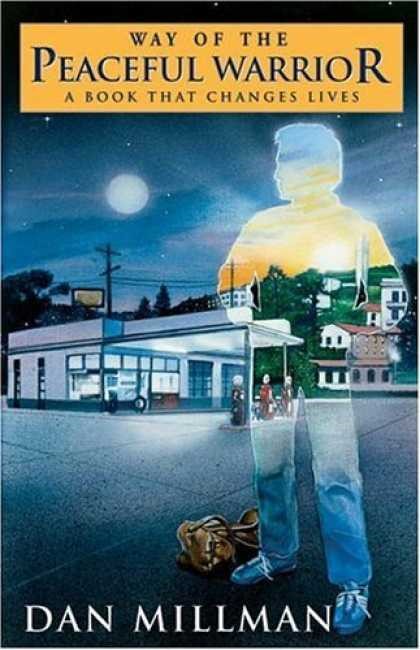
    The slogan of this book is “a book that changes lives” and it’s true! This book is part autobiography and part fiction. The book is set during the author’s college-days, when he was a world-class gymnast succeeding at life yet miserable, angry, and depressed. Dan’s life changes when he meets an old man working as a gas station attendant who becomes his spiritual teacher. 

    This book explains how we trap ourselves with the illusions of our minds, and as the old man (who goes by Socrates) teaches Dan how to unlearn what he has learned, and learn a new way to be present, at peace, and happy, we follow along and learn too. 

    This book goes super in-depth about the mind and the illusions our mind fools us into believing. It will blow your socks off. You may want to read a little at a time to let the information fully sink in. My husband refers to this book, along with The Celestine Prophecy, as his bibles. 

    Applying the information in this book definitely changed my relationships with all the men in my life for the better! This book brings to light a crucial difference in men’s and women’s emotional needs: Men primarily want RESPECT over love, while women primarily want LOVE over respect. The book also explains how to break free of the power struggles couples get stuck in and keep your relationship stable and healthy.  

    The author found this love and respect principle in the form of a bible verse. He believed that the verse was meant to be taken literally, and its importance had been overlooked. When he started teaching it to the couples he counseled, and saw dramatic changes take place – it even saved marriages. It may sound cheesy, but the love and respect principle proves itself to be true and EXTREMELY valuable. The information is not just valuable for couples either, and can help anyone better understand and communicate with the opposite sex. 

     According to Time Magazine, Byron Katie is “[a] spiritual innovator for the new millennium.” 

    In her 30s, Byron Katie was severely depressed, suicidal, and was often unable to leave her bedroom. Then one morning she had a life changing realization:

    “I discovered that when I believed my thoughts, I suffered, but that when I didn’t believe them, I didn’t suffer, and that this is true for every human being.”

    – Byron Katie, thework.com

    The book describes a self inquiry method known as “The Work” designed to help us end mental and emotional suffering. I did not actually read this book, but when I was going through a particularly rough time emotionally, my husband printed out the self-inquiry work sheets for me to do. Now, I already knew about how we shouldn’t believe all the negative shit our mind tells us, and doing “The Work” still blew-my mind!  

    This helped me feel at peace with myself, and freed up so much of the mental and emotional struggling I was going through. I’d highly recommend it to anyone, particularly if you struggle with guilt, anxiety, fear, worry, and anger.  

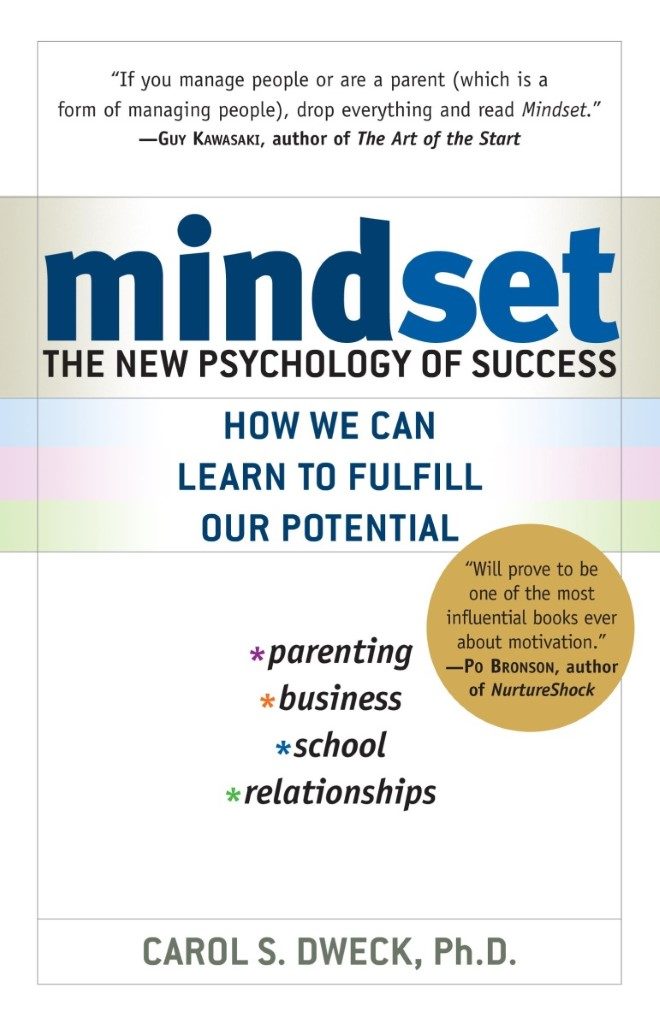
    This book changed my life because it describes two different types of mindsets people have, which determines if we are more apt to struggle or succeed in school, work, sports, or anything else we do in life. 

    The two mindsets are about how we view ourselves and our abilities. A person with a Growth Mindset believes that their skills and abilities aren’t set in stone; that they can improve anything if they work at it. They tend to use negative experiences to learn, grow, and become successful. A person with a Fixed Mindset believes their skills and abilities are set in stone. This results in them feeling like their skills and abilities determine their value as a person, so when they fail to meet performance expectations they’re too busy feeling worthless to be able to think about how they can learn from the experience.  

     I realized that I tend to have a fixed mindset and that’s why I struggle so much when I fail to live up to my (high) performance standards. This book helped me understand myself better, get past my setbacks faster, and learn from my experiences. If you want to succeed at anything in life and stop feeling shitty about yourself, get this book! 

    Parent Effectiveness Training is full of techniques on how to listen better, how to talk so that your kids will listen, and how to solve problems. It also has diagrams that I found helpful for understanding the concepts. 

    Although I was not a parent when I read this at about age 19, I got SO much value and practical, usable information from this book! It changed my life by changing how I viewed relationships and communication and by giving me the tools I needed to help make my relationships thrive. 

    The stuff works! I started communicating differently in my relationships and with the kids I babysat and there was less misunderstanding, less power struggles, and more happiness. I still use the methods today to talk with or resolve conflicts with my husband or anyone else in my life.

    If you liked this article and want to hear when I publish new content, join my mailing list below.

  • Give up Fighting for Respect (short post)

    Give up Fighting for Respect (short post)

    You never have to try to convince others to respect you when you stop living to keep everyone else happy and live life for you.

    If you’re feeling like you have to try to “make” others respect you, that’s a losing battle. Figure out who you want to be and be true to that person to the best of your abilities. People around you will either respect you, or they won’t. And those who respect you will be respecting the real you if you’re being genuine and true to yourself in your actions. They’ll be people you want in your life. Those who don’t respect you will most likely be people you don’t want in your life anyway.

    Helping others, being compassionate, and lifting up those around us are great qualities in a person. But you don’t want to live solely for making others happy while neglecting yourself. Especially if it conflicts with being true to yourself.

  • Life is a Balancing Act (short post)

    Life is a Balancing Act (short post)

    Like holding a pose in dance or gymnastics, where muscles are micro-firing to keep us in alignment, we need to be constantly making adjustments in life to keep ourselves centered. I’ve been thinking lately about how important balance in life for our mental, emotional, physical and spiritual well-being… and how much more I value it than I used to. I was a dancer and a gymnast, and when I was balancing in a pose I appeared still to onlookers, but little muscles throughout my entire body were firing – different ones engaging and disengaging in milliseconds. It’s the same in life. Things are constantly changing around us and we’re tweaking and adjusting things constantly to maintain balance.


    You know when you’re out of balance – you feel terrible. And you might not be out of balance for the reason(s) you think. Everything affects everything else. Diet affects mental state, not just your physical appearance. You can meditate but still struggle with anxiety because your diet is crap. You could eat well but still feel drained all the time because you’re not exercising enough. Even things that are “healthy” can be bad for you in excess. Keep all aspects in mind when pursuing health in any form. Look at the big picture. Pay attention to how you feel and try making changes and see how you feel. 

RSS
Follow by Email
Pinterest
fb-share-icon
LinkedIn
Share
Instagram